
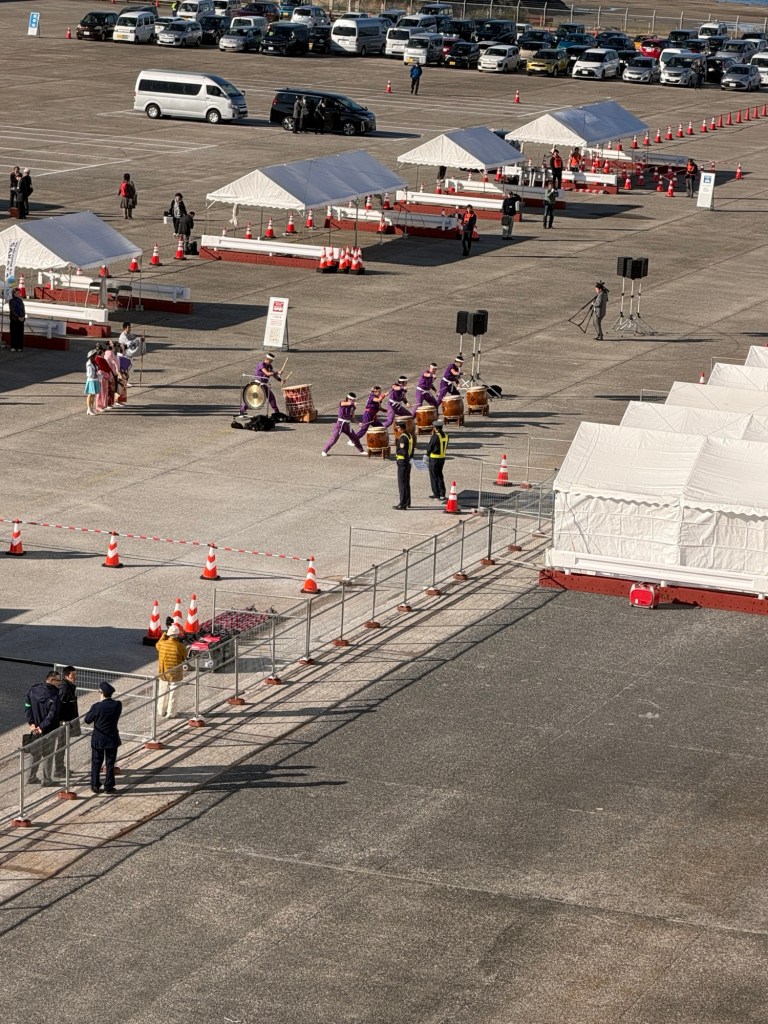
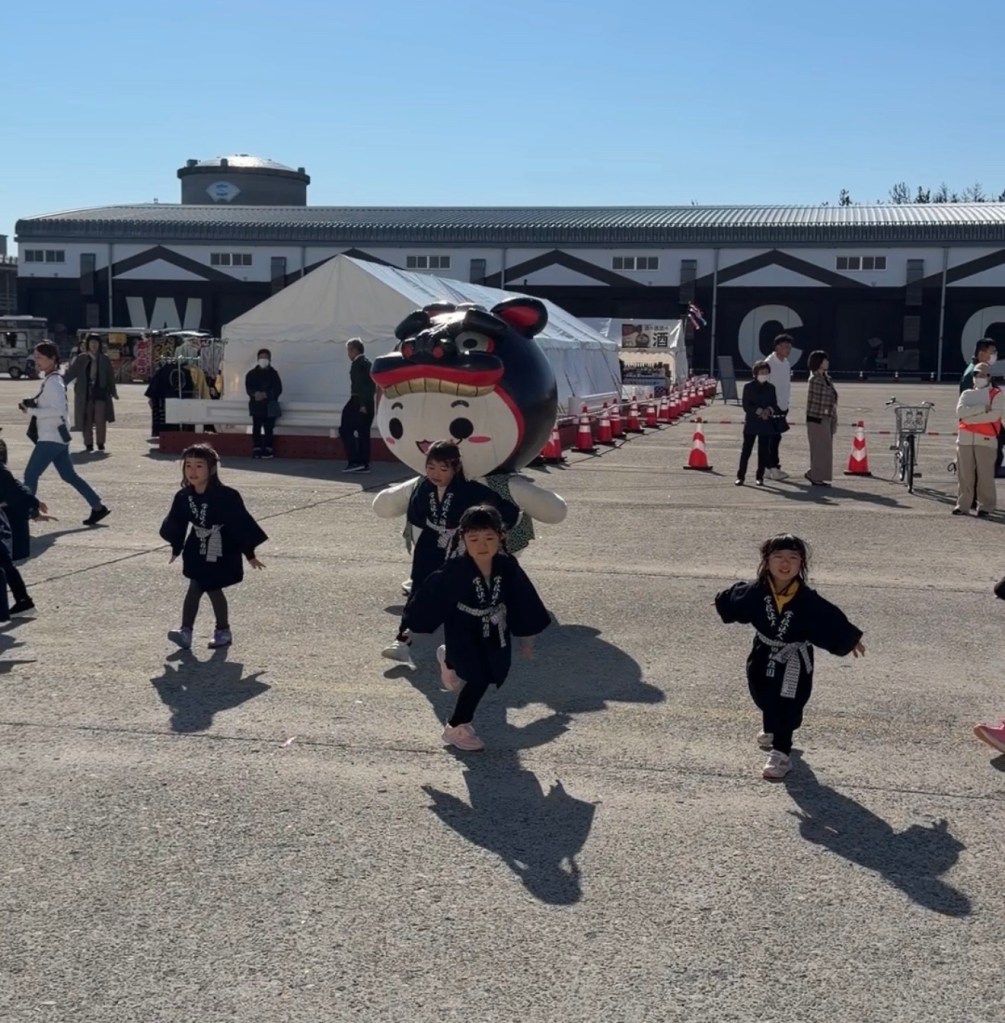

NB: have video saved
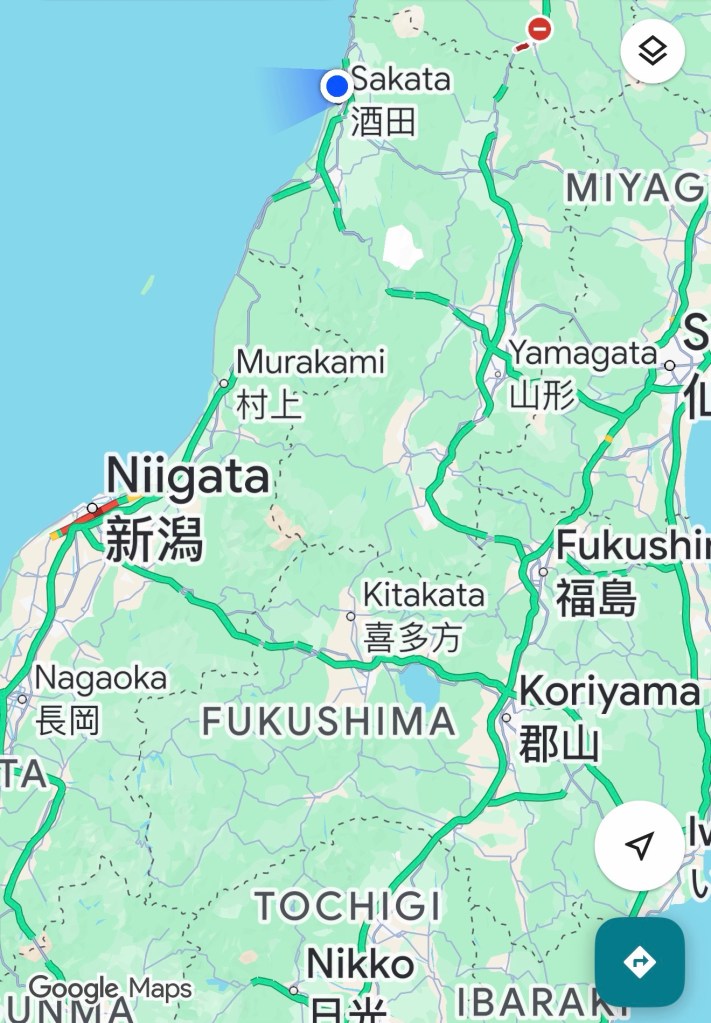
A short day with the rice crackers and rice storage visit. This is major rice area. An early ship departure for a day at sea tomorrow
Rice factory tour
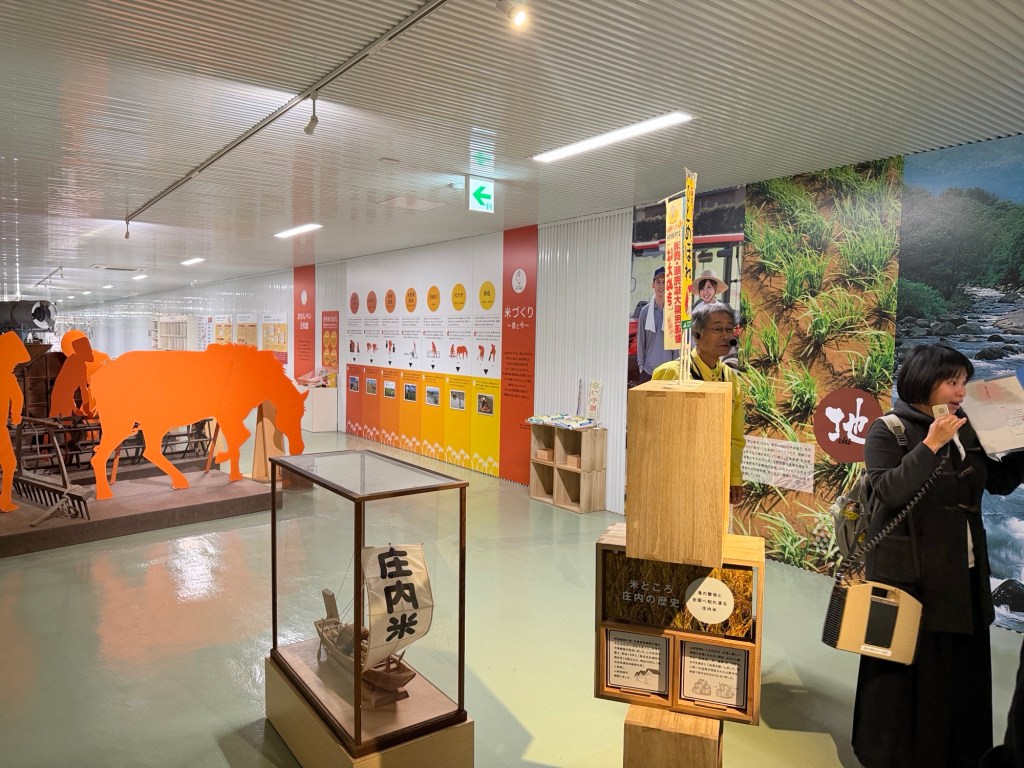
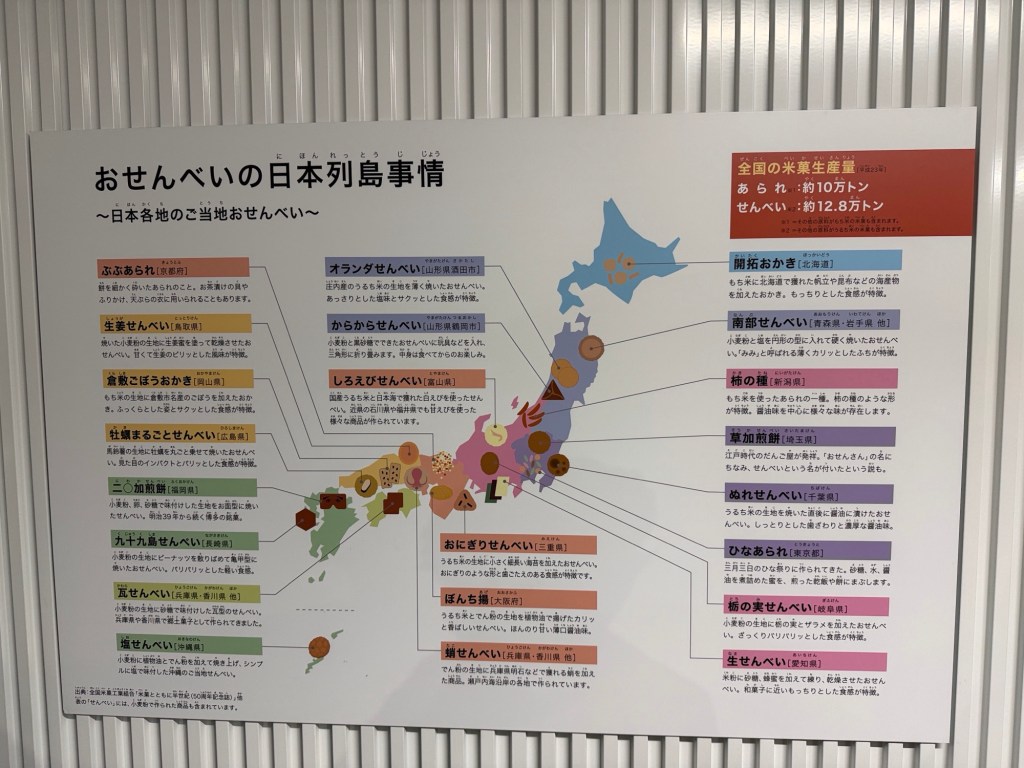
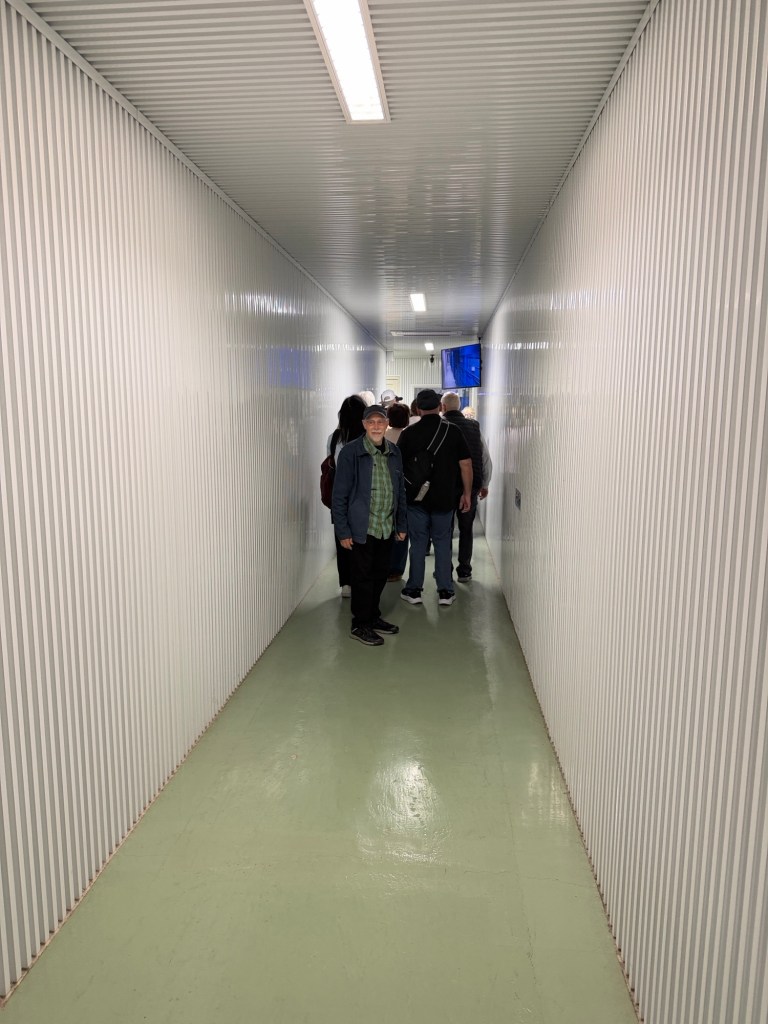
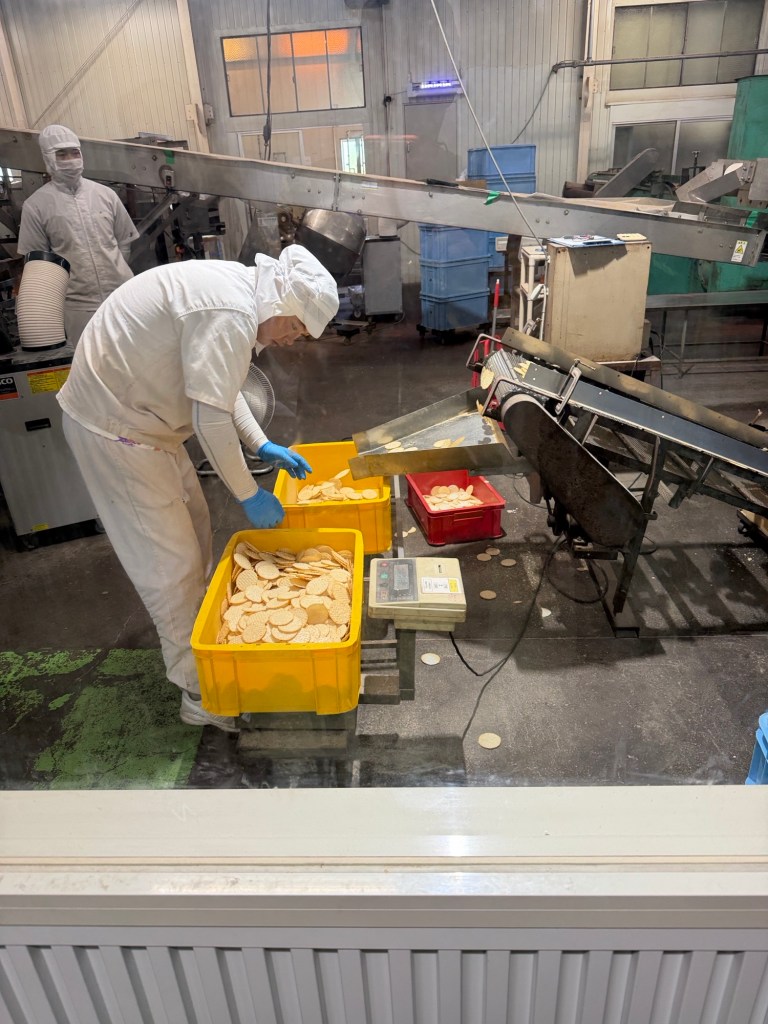
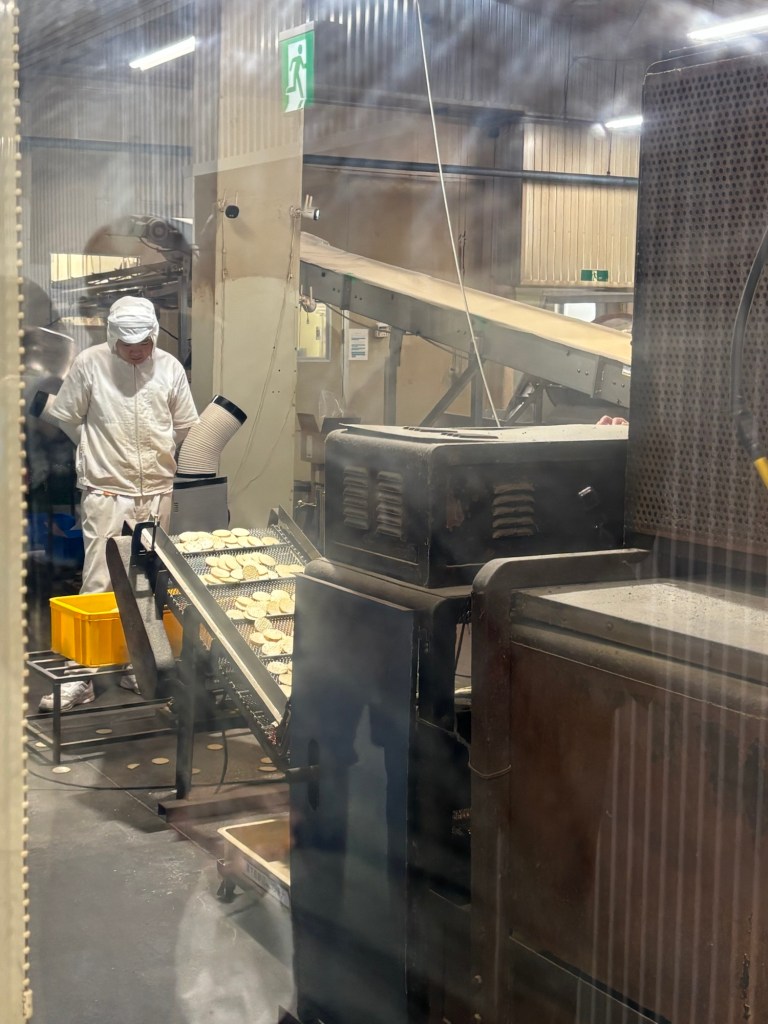
This has to be one of the oddest tours I’ve ever been on. All you can see is occasional picture of obsolete machinery and rice crackers moving along a conveyor. Narrow hallway echoes a lot so it was hard to hear the guide.
Good story about Tootsie rolls: a woman we met on the tour told us she used to work at the Tootsie Roll factory in Hoboken. Her job was to write letters in answer to complaints about pieces foreign objects found in the rolls. She would send the apology note along with a complimentary box of tootsie rolls.

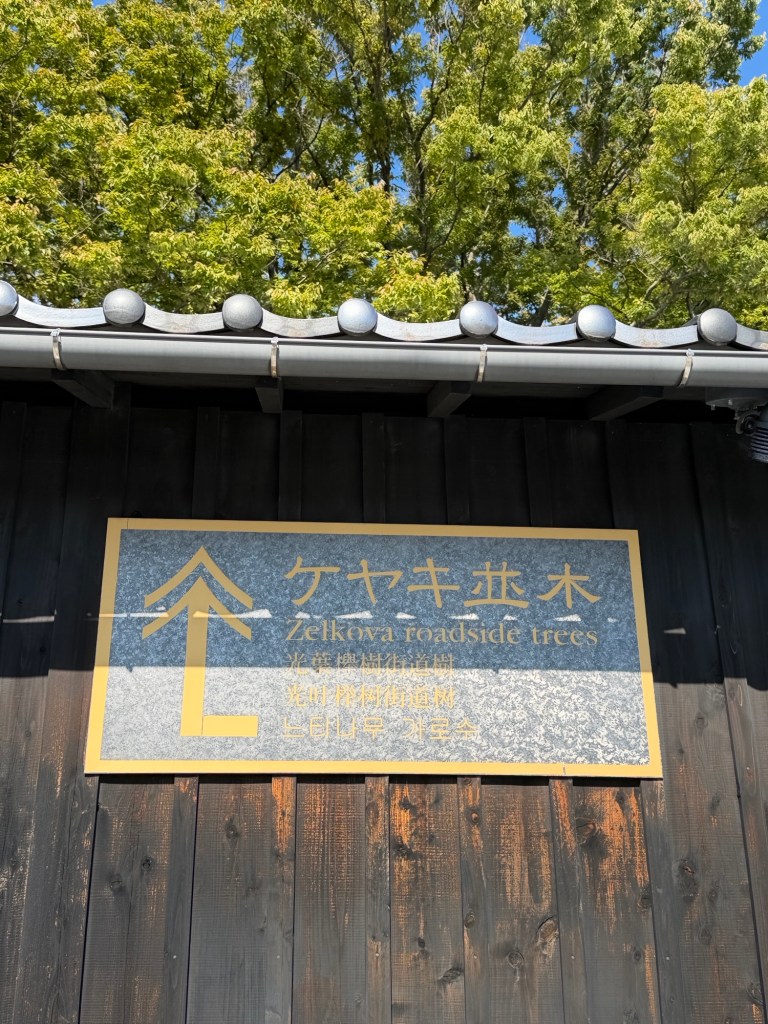
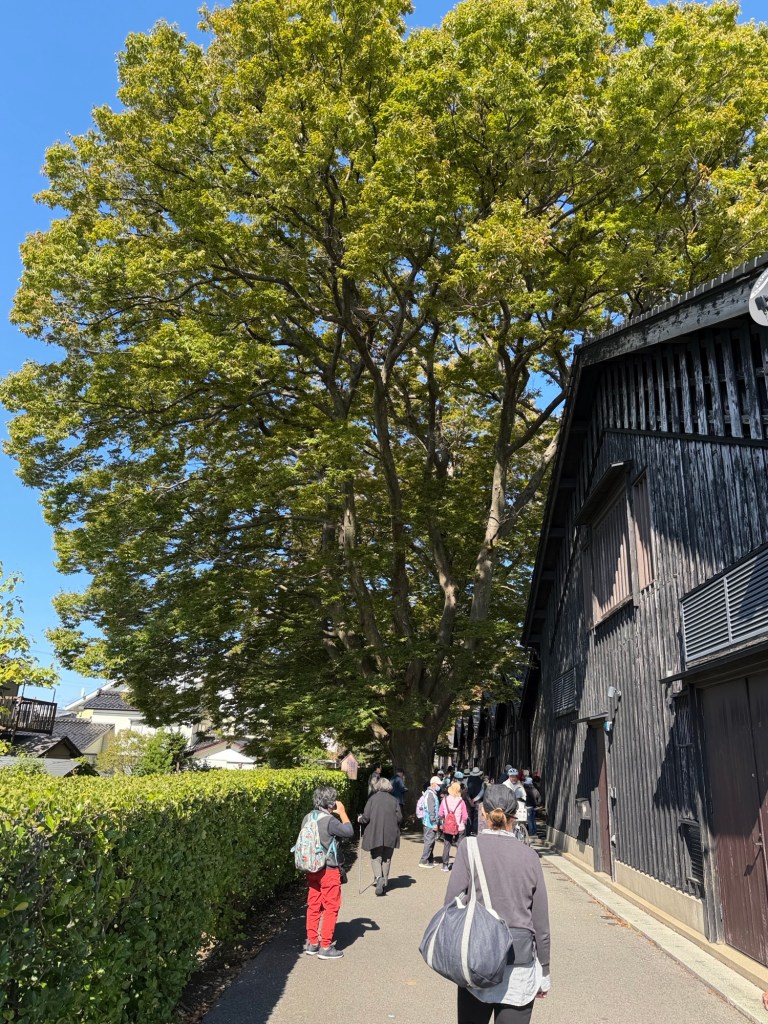
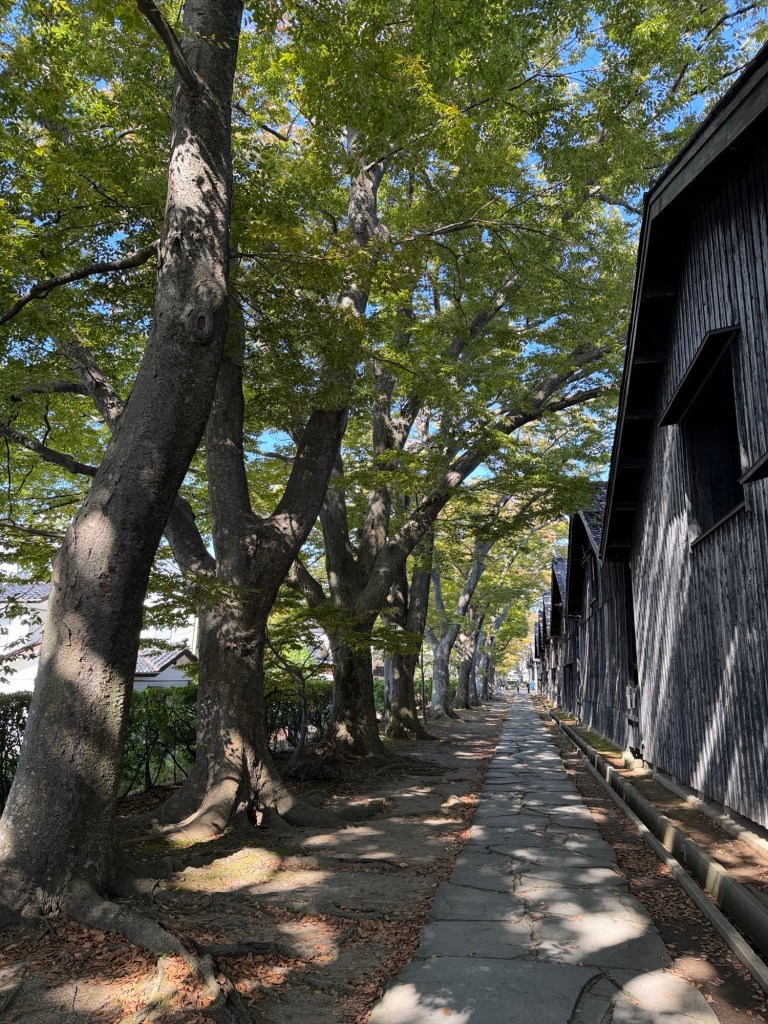
Then to old rice warehouse


 Boog's Blog
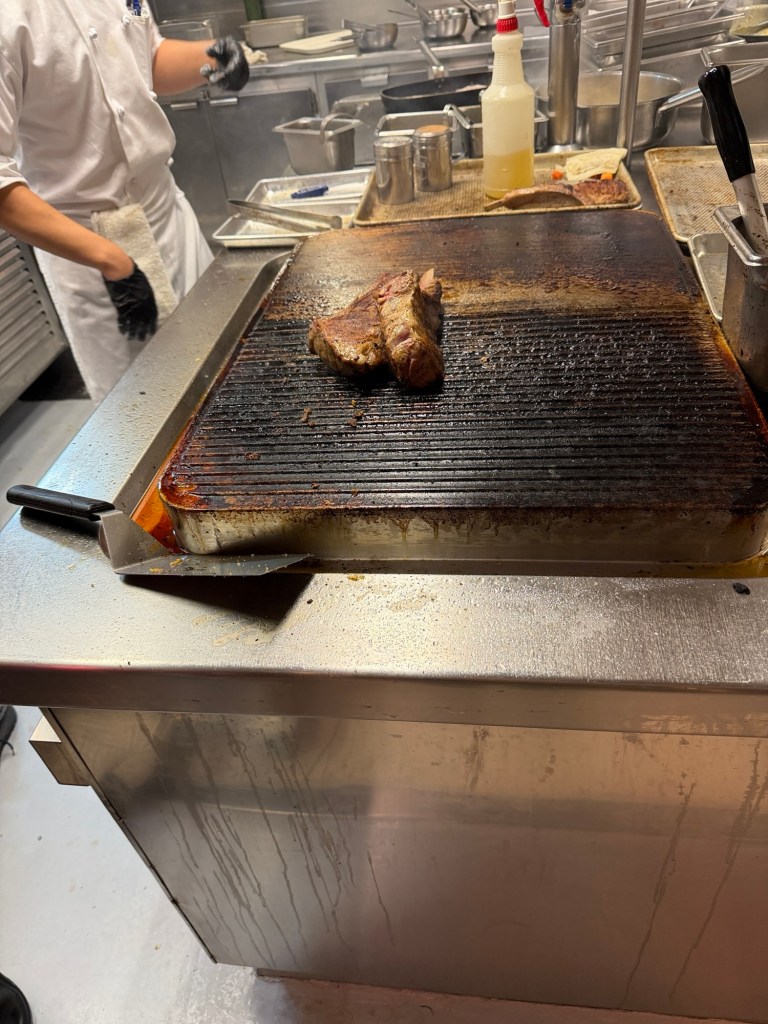
The veal chop looks great but the stove needs a lot of cleaning!
Okay, this seems like an odd stop – definitely off the beaten path – Nobue didn’t even recognize the city name even though she grew up less than 100 miles away; she definitely knows the river that runs through the town – Mogami Gawa – but not much else. When I first saw it on the route map I thought it would be for a trip to Dewa Sanzan – https://dewasanzan.com/ – which is about an hour drive but a famous pilgrimage site. I’m a big fan of the rice and the producers around there, being related to one :-), but…
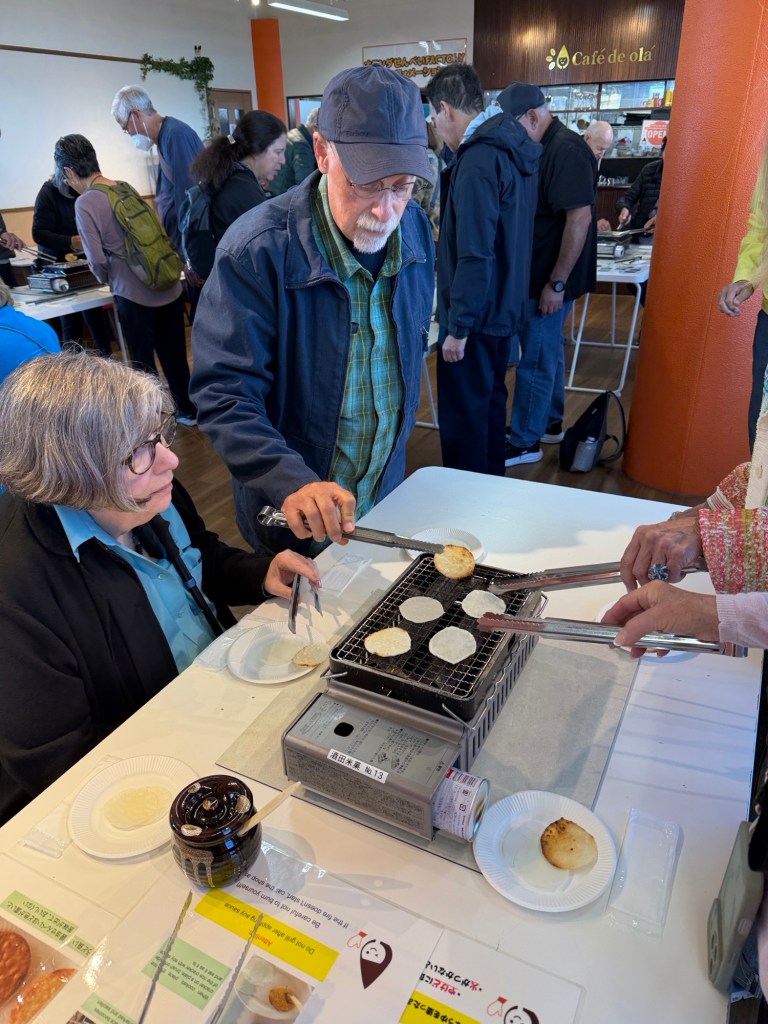
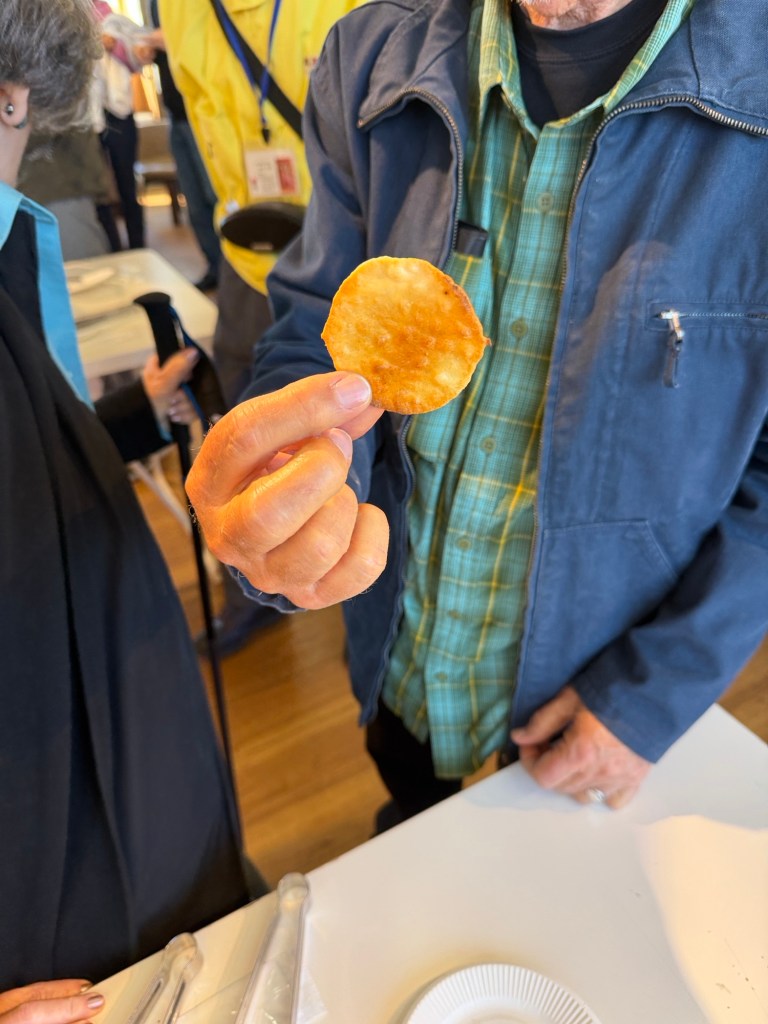
The Olanda Senbei (Holland rice cracker) factory was an interesting choice, especially since there wasn’t a visit to a Sake distillery, of which there are likely to be a few around (most rice centers have a bunch around :-). Maintaining the old machines to produce the rice crackers in the “traditional” way (everything is relative) is probably a source of pride for the owners. Often these type of places are run by the same family for generations with the latest generation trained to maintain the processes from the past (been to a few of them). Nobue’s area also has a senbei style, but theirs is more snack food related – KAKINOTANE (https://en.wikipedia.org/wiki/Kaki_no_tane) – which is shaped like persimmon seeds (which is the literal translation) and mixed with peanuts for popular snacks (one of Nobue’s addictions). Most of the rice centers have their own version of senbei.
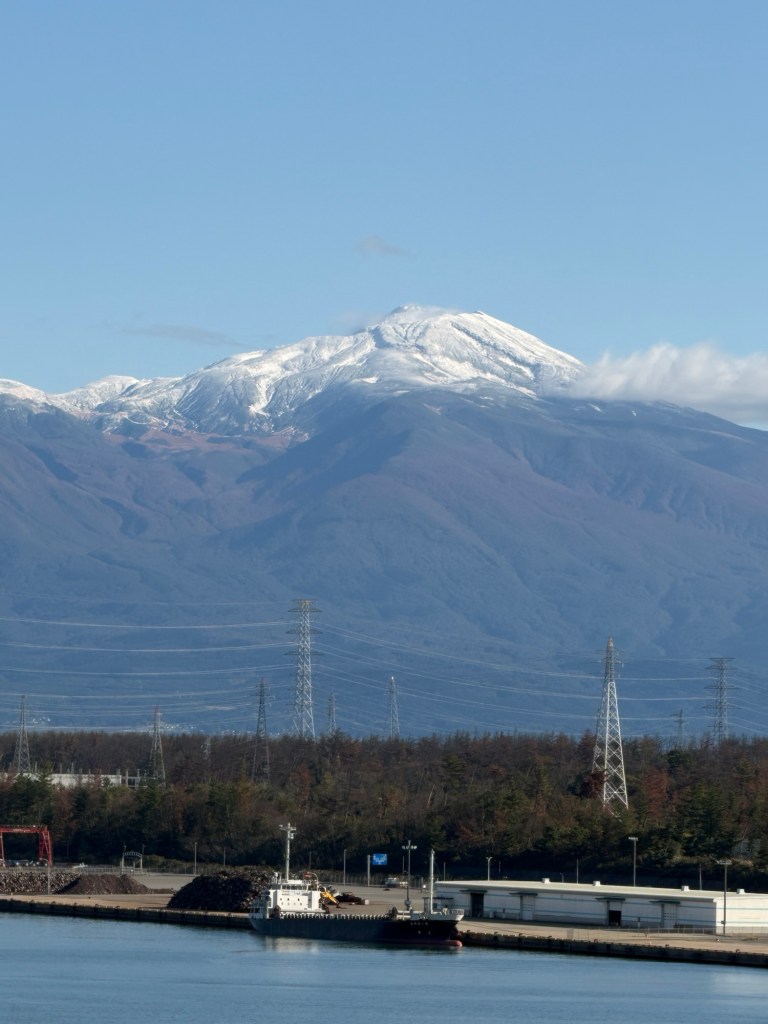
The snow-capped mountain range is the same one that Nobue’s home village sits in, just a few miles to the South.