
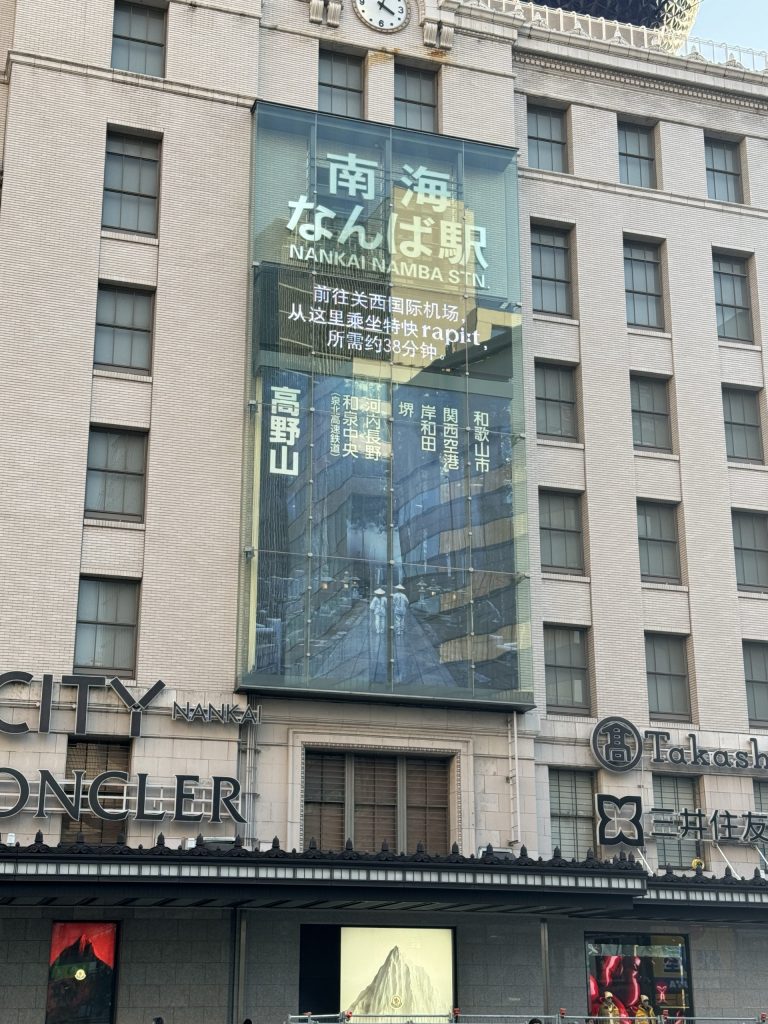
QB taking a day off to stay in a hotel, and avoid being outside and wearing herself out. However, Namba is so big that even an inside stroll is tiring. Takashimaya about the size of Macy’s NYC or maybe a bit bigger. The only service I have not seen in this station/compound is a 100 bed hospital – but all corners have not been explored as yet.
Luggage transported from Echizen Village arrived on time and wrapped in an excessive amount of plastic. Plastic is ubiquitous on everything. Almost everything is wrapped or sealed in it. Picnic dinners require a large plastic bag for disposal. Thought WFoods wasteful, of course it is, but here more so.

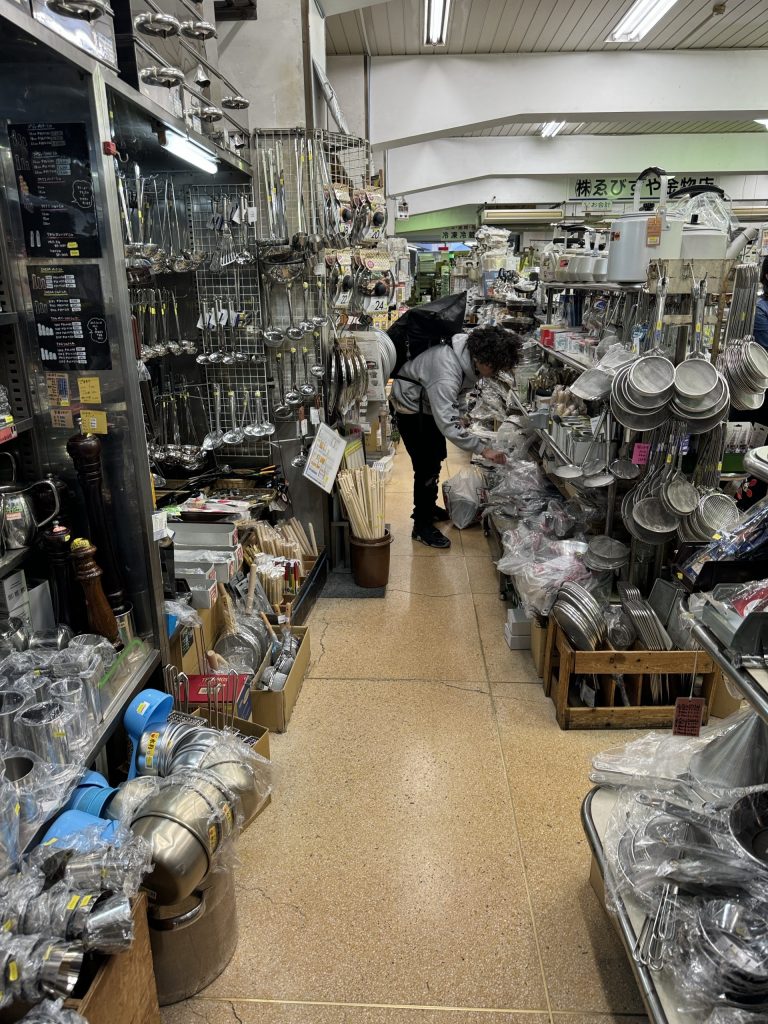
Wandering ended for QB at a Starbucks Reserve, one of the so many Starbucks close together. KB went on a stroll to the kitchen supply area.


Checked out the knives of course. These are the closest to Takada’s a preferred maker of ours.
Back to Dotonbori. The street is well known for its street food. Osaka seems to be known for street food.


Every food stall passed had a line. Only variation was the length of the line.

Originally thought it was the cruise line but wherever we go we find just the same few items as above
Pre-dinner spa (QB went but was not happy with the women’s side, small, dingy), men’s side lovely and the best of all hotel ones visited. While soaking one person almost tripped over me. Gomen Nasi, repeated (sorry, excuse me). After a bit I realized he is blind. Seemed to find his way around the large room so I am guessing he is a regular.
Non-picnic dinner for a change. QB can now taste some food. Dim Sum seemed to be a good choice.


 Boog's Blog
One thing to keep in mind, NAMBA Station is the major terminal for a PRIVATE rail line, Nankai Railroad. Not a lot of people realize that much of the excellent train service, especially around big cities, is owned and operated by private companies. Often they are related to major retail companies – in Tokyo, which I’m more familiar with, the Tokyu and Keio run major train networks which often connect department stores/shopping centers.
Osaka not only “seems” to be known for good street food, it is well known for it. In general, Osaka is considered a foodie city which always had food stalls (which also exist in Tokyo), but those stalls have been better than most and social media has spread the word (foodies worldwide always know where to look :-). Osaka was one of the destinations on Netflix’ Street Food Asia show.
As for the lack of fruit, Japan still tends to rely on seasonal crops much more than elsewhere. This time of year, that usually means citrus, especially MIKKAN (what we call mandarin oranges) and maybe grapes, though it might be a bit early. Some of the larger/more expensive stores might have some imported fruits, but generally the seasons rule (as I remember well – was frustrating at times).
Likely Takashimaya is the department store for Namba. Did not realize the railroad/department store relationship.
Fruit not diverse even in Takashimaya or Mitsokosi.
Judging that the home office of Takashimaya is the Nankai Building in Osaka, it’s probably a good guess :-).
As for the fruit, I’m not sure why you are surprised. Imported fruit is not a major item (the biggest being pineapples and bananas, with a few kiwis). Most things that might be fresh would look less “perfect”, so limited market. That and the long standing reliance on seasonal crops doesn’t make for a big market.