
“Why be that pig followin’”
Where much will be revealed about Jamon…. Some longstanding questions of ours answered……
Turns out we have a rest day in the small town. As mentioned yesterday, no waterfall nearby. However there is a Museo de Jamon.
Breakfast at the gas station included fresh squeezed orange juice, likely Sevilla oranges. Good wherever they were from.
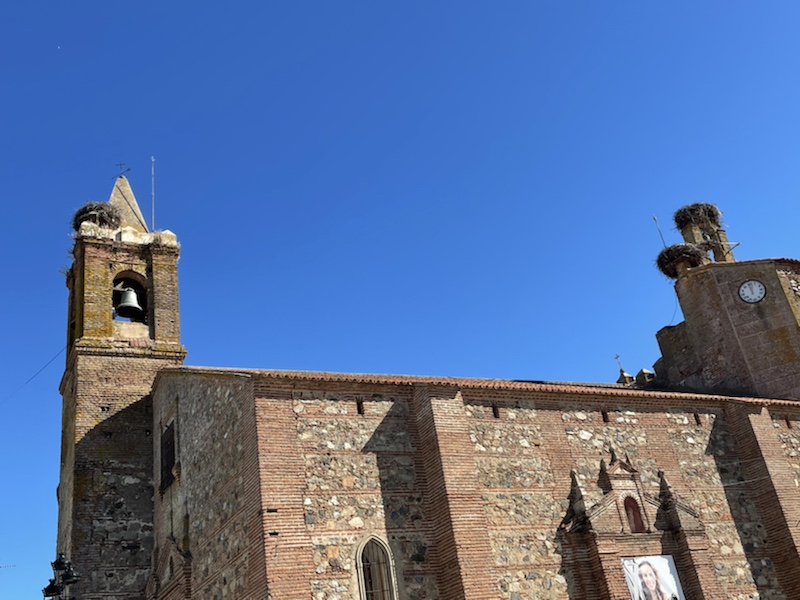
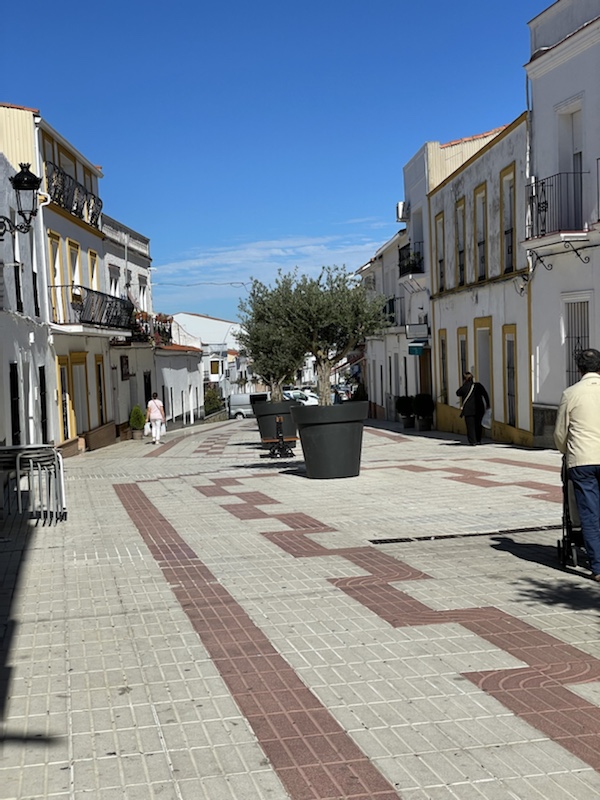
Tourist office visit was fabulous. He helped us find a good spot to start walking tomorrow and even arranged the taxi to take us to that spot. QB wanted a shorter day. But hardly short.
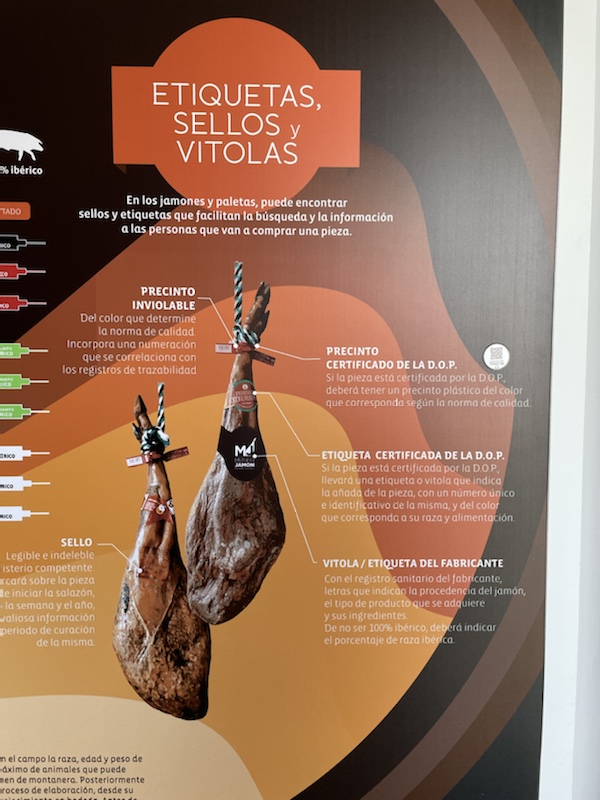
Then a review and walk-through of the Museo de Jamon. Exhibit hall in Spanish but QR codes translated much of it. Good graphics, so we finally understood much of the grading, the labeling and the local pasturing.
We are most definitely in the right area to be sampling the Best of the Iberico pig.
At the museum there was a great film of the area and the Dehesa, the pasture. We were quite lucky to see many free range pigs running around, even approaching us a little bit. The “Dehesa” and its meaning.
It is clear that the Iberico Pig is uniquely adapted to this area; many other types of livestock were found wanting in terms of protein production. Often the Iberico is actually a cross with another pig breed.
Tourist office person told us the best place to get the best sliced Bellota. We went to the second best because of location; named Honky Tonk. Apart from the ham itself, slicing quality is critical.
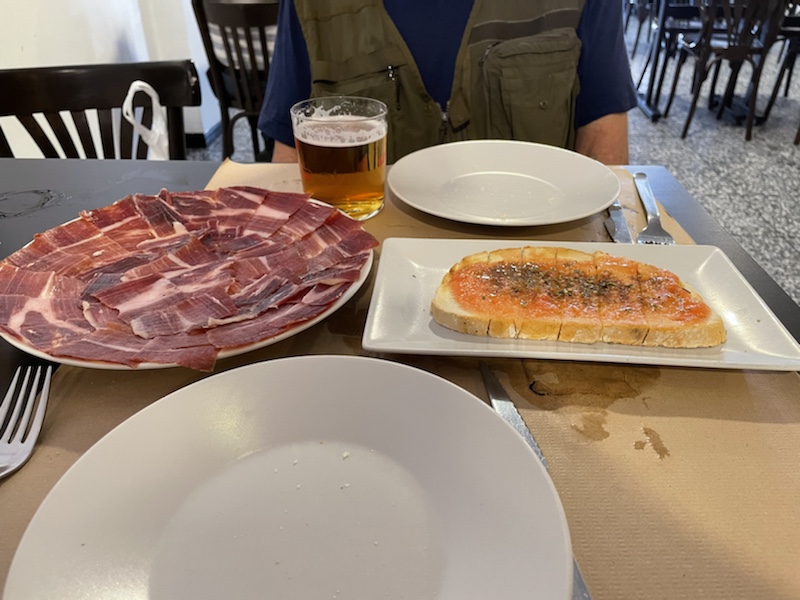
Served with large croutons and liver pate. The jamon was hand sliced and had an orange tag (see below) which is equivalent to the red tag – designating meeting a certain standard. I asked about the price difference between the red and black tags. Discussion ensued, both the server and the slicer independently researched on the web and reported back. About 10% in THEIR tienda store. Looking into shops there is a wide range even within a standard (think Champagne or other DOP items). Local price about 16 euros per 100gm for the quality we got at Leo and Honky Tonk.
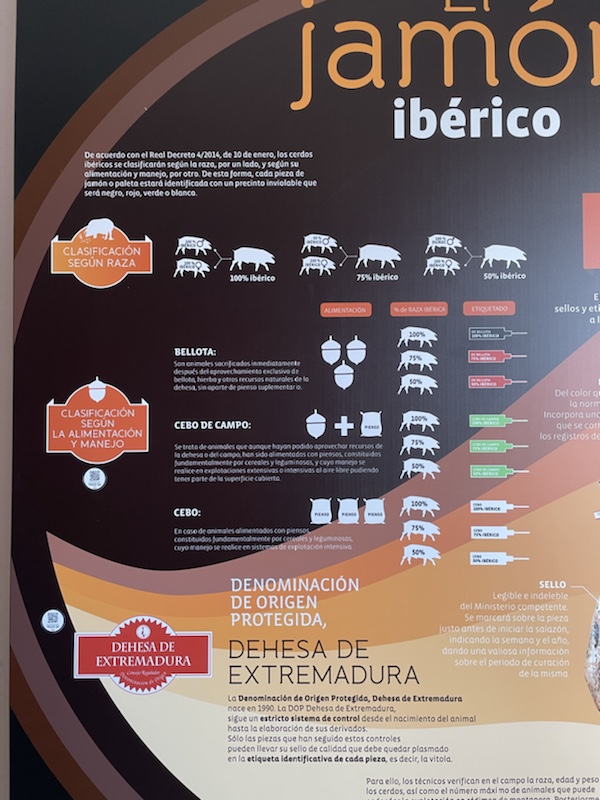
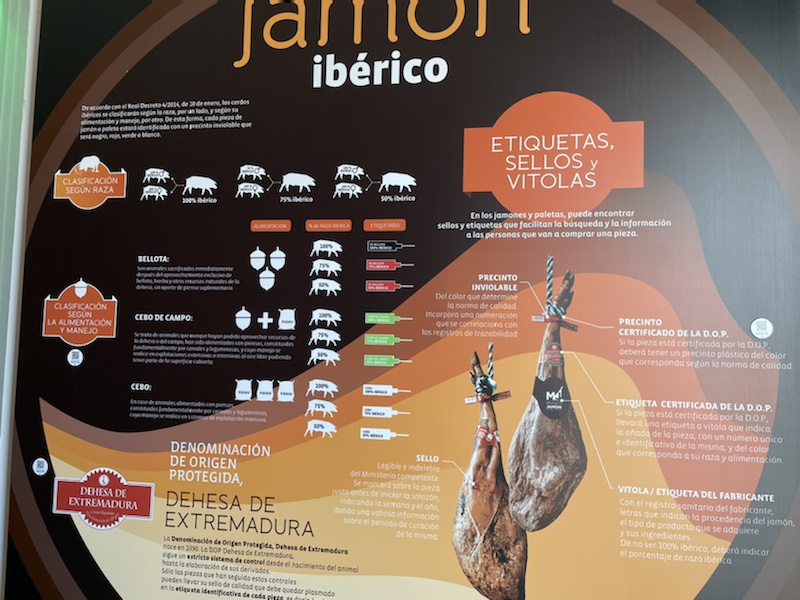
In order of standard for grading (not quality)
Black. (Can be 75-100% Imberico)
Red and Orange (maybe size dependent). (Can be 50-75% Imberico)
Green
White
Other labels such as DOP and colors for diet of pig. Brand names for quality and or price.
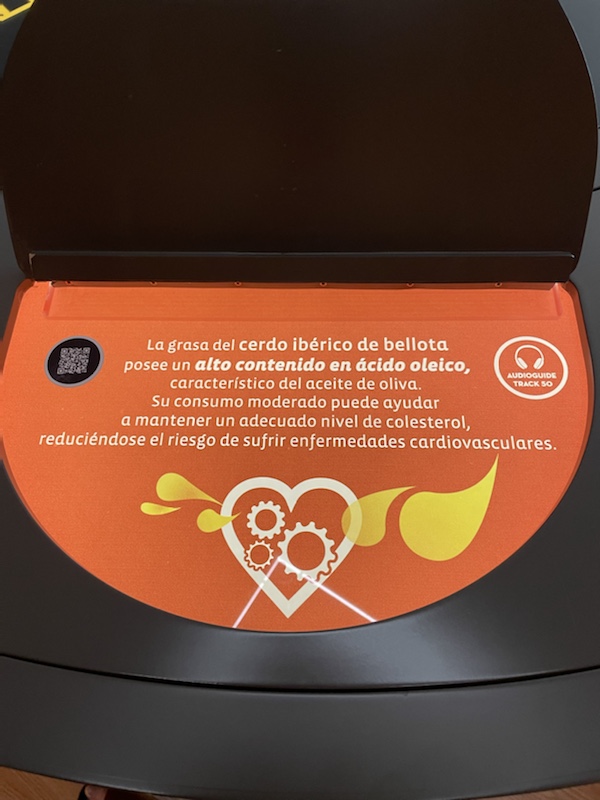
Much research needs to be further done as we have just scratched the surface of the pricing and brand names versus labeling. Much eating too. Apparently it is practically a health food.


 Boog's Blog
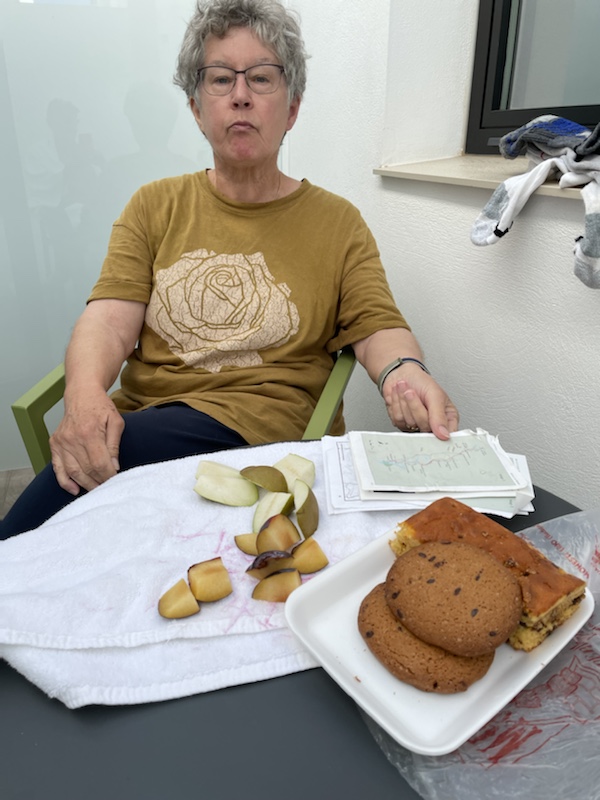
The socks look exhausted; Sharon looks a bit worn out. The fruit looks tasty but the pastry looks awesome. I’ve learned things about pigs that I would never have known without this blog post. I have always respected the pig but now, I desire to eat of Iberico pigs. Often.
Jamon Iberico is health food. No question. Latest Harvard research on fats puts pork lard near the top of healthy fats, just above olive oil but slightly below canola oil. The Iberico ham is extra fatty, so extra healthy. Cristina’s grandmother was 4 feet tall and 3 feet wide. She lived to be over 100 years old eating jamon 4 times per day.
Glad to know that Sharon’s toes did not have to travel up and down 12 miles of hilly terrain today. Perhaps attachment could be reinforced using gorilla tape.
Also good to know that jamon is a health food as much more lies ahead.