
21 September warm light rain in the morning and then pointlessly hot sunny day around 27-28C
Now officially in Pays Basque. Undulating ride, shorter hills than a few days ago but somewhat steep (one was 12% which is about my limit ). Lousy quality road for the first 10 km or so; much harder to climb on poor highly granulated hills. QB, pelerine paresseuse, took taxi to Aroue, then stomped around 7 miles to St. Palais.
Yesterday I met Dave, an Aussie, at his bike shop. Needed air for my tires and when I went in to ask he spoke perfect English. He had just biked from Bury St. Edwards to here and wanted to discuss bikes – found my Bike Friday a new toy to both ride and understand. Had hoped to have a beer with him later but it did not work out.
The two star hotel of yesterday was essentially a three star. Excellent. Today we are in real two star, quite decent and far better than the two stars of yesteryear, either that or our standards continue to decline.
The hills in front of us, really (Pyrenees) mountains, look similar to the ridges we have crossed – just know that they are higher.
St. Palais is a market town. Nice for shopping and walking about but not long on history other than being a traditional stopping point for the pilgrims. The Gibralter Stele is just out of town. It marks the intersection of the Le Puy and other pilgrim routes and the Spanish Route (actually called the French Way), the one we will soon be on.
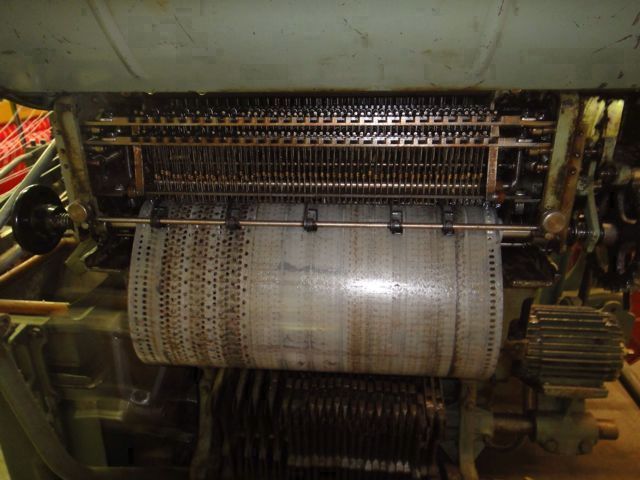
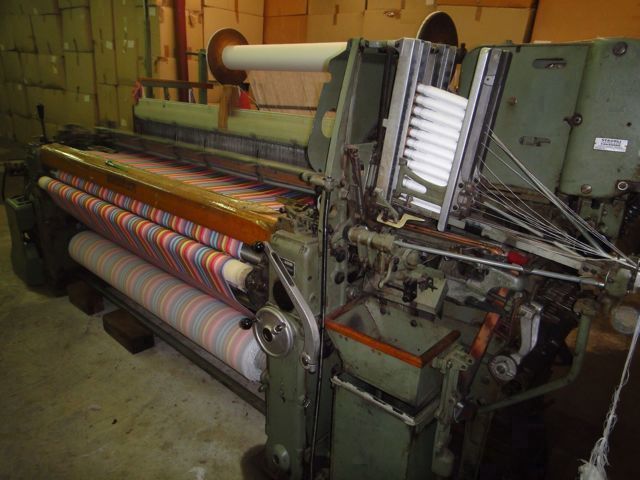
Major highlight of today was the visit to the traditional Basque fabric factory. Below is a short video I took there. They were extremely nice and let us wander around the old equipment and ask questions about the Basque language and food. The owner is the granddaughter of the founder. Many piano roll type weaving patterns and old looms. Fantastic!
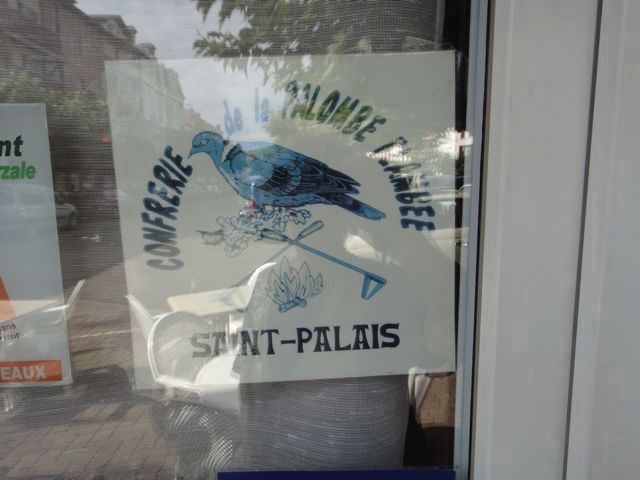
Explanations of garbure ( a soup with goose and veggies ), piperade ( similar to an omelet in a pan with meats and grease and jambon and more stuff – will take a picture as soon as we have one ). Less appealing specialty of region is roasted (freshly shot) wood pigeon, with grease (or something) poured on them from a special funnel. Starting to see bottles of Sangria in the stores, chorizos as well, and tapas on the menus.
Most signs are in Basque and in French. Some vocabulary for those who collect such:
Ague = Bonjour
Ikus Arte´ ( The I has a dot over it ) = Au Revoir
Milesker = Merci
X is pronounced as a ch in Spanish
There are seven Basque counties ( hence the seven stripes on the linen ). St. Palais has three Basse-Navarre, Labourd, and four in Spain. The striped linen was originally blue, then striped and used to cover cows to protect them from flies.
Pics to include the multi-language sign
the very short video
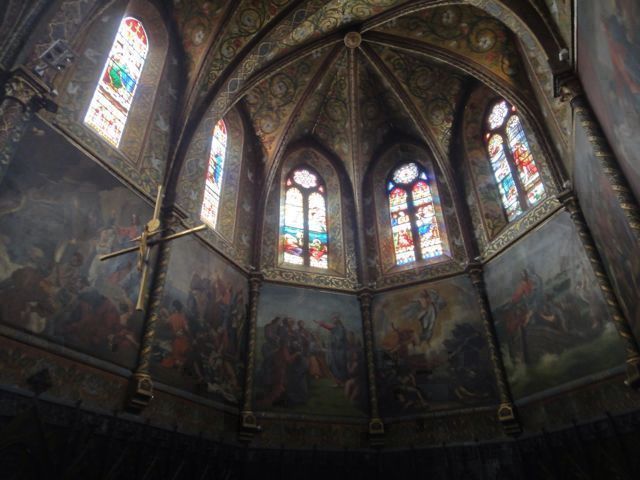
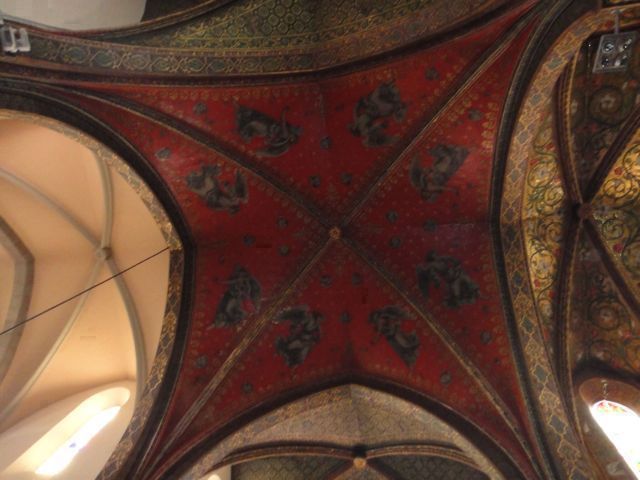
The Church in St. Palais – very decorated with both paintings and paint that looks like wallpaper.
Piano roll type computer cards of an earlier age.



 Boog's Blog